
Valley of Flowers Trek India: Complete Guide for First-Time Trekkers
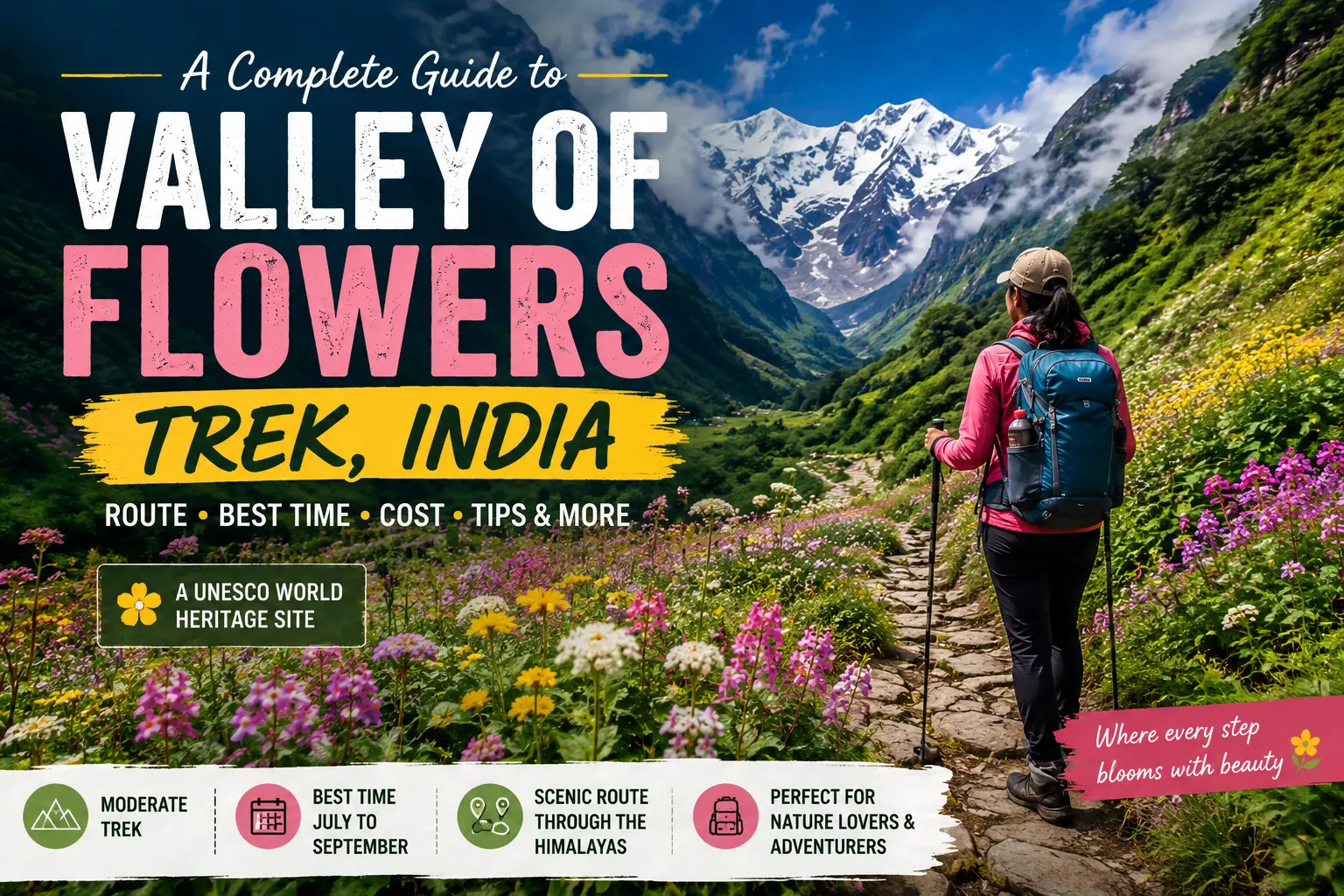
If you love mountains, greenery and quiet places, the Valley of Flowers trek in India is one of those journeys that can stay with you for a long time. Located in Uttarakhand’s Chamoli district, the Valley of Flowers National Park is a UNESCO World Heritage Site known for its alpine meadows, Himalayan scenery and rich plant life.
What makes the trek special is not just the flowers. The journey takes you through mountain trails, streams, waterfalls and the small settlement of Ghangaria before you reach the famous valley.
Why Is the Valley of Flowers Trek India So Special?
The valley sits at around 3,600 metres above sea level and is home to hundreds of plant species. Uttarakhand Tourism lists more than 600 species, including orchids, poppies, primulas, marigolds, daisies and anemones.
The best flower display is generally during July to September, which makes the monsoon months particularly attractive for this trek.
You may also see Himalayan wildlife in the wider protected area, including species such as the Himalayan monal, red fox and Himalayan black bear.
Valley of Flowers Trek India Route
For most travellers, the journey starts by road towards Govindghat. From there, you trek towards Ghangaria, which is the main base for the Valley of Flowers and Hemkund Sahib routes.
A simple route looks like this:
Dehradun/Rishikesh → Govindghat → Ghangaria → Valley of Flowers → Ghangaria → Govindghat
Uttarakhand Tourism describes the trek as moderate to challenging.
Govindghat to Ghangaria
This is the main approach trek to the base village. The distance is roughly 13–15 km depending on the route/source and current trail arrangements. Ghangaria is situated at about 3,050 metres.
The trail is not just about reaching the destination. You will pass waterfalls, streams and mountain scenery along the way.
Ghangaria to Valley of Flowers
From Ghangaria, the valley is a shorter trekking section. Uttarakhand Tourism’s itinerary describes it as approximately 4 km from Ghangaria, with the trail passing through forests before opening into the flower-filled landscape.
One important rule is that overnight camping is not allowed inside the Valley of Flowers. Visitors need to return to Ghangaria by the designated closing time. (Uttarakhand Tourism)
Best Time to Visit Valley of Flowers
If flowers are your main reason for visiting, July to September is generally the period to consider. Uttarakhand Tourism says the flowers are at their maximum abundance during these months. August can be particularly attractive because the valley is usually full of seasonal flowers and greenery. However, this is also monsoon season, so rain can make trails slippery and road travel more difficult.
If you are planning the trek, don’t choose your dates only because of the flowers. Check current weather, road conditions and official park information before leaving.
How to Reach Valley of Flowers Trek India
You cannot drive directly to the valley.
By Road
You first need to reach Govindghat, which is connected by road to major towns in Uttarakhand. From Govindghat, the journey continues on foot towards Ghangaria.
By Train
Rishikesh is the nearest major railhead listed by Uttarakhand Tourism. From there, you can continue by road towards Govindghat.
By Air
Jolly Grant Airport near Dehradun is the nearest airport listed by Uttarakhand Tourism. From the airport, you need to continue by road towards Govindghat.
How Many Days Do You Need?
For a comfortable trip, plan around 5–7 days, depending on where you are starting from and whether you want to include Hemkund Sahib.
Uttarakhand Tourism currently lists a 6-night, 7-day Govindghat-to-Valley of Flowers itinerary and describes the experience as moderate to challenging.
A longer itinerary gives you more flexibility in case rain or road conditions cause delays.
What Should You Pack?
You don’t need an enormous backpack, but you do need the right things.
Valley of Flowers Trek Packing List
Good trekking shoes with proper grip
Lightweight rain jacket
Warm layers
Quick-drying clothes
Extra socks
Water bottle
Sunglasses
Sunscreen
Personal medicines
Small first-aid kit
Power bank
Waterproof bag or covers
ID and required documents
The weather can change quickly in the mountains, so carrying layers is much better than relying on one heavy jacket.
Is Valley of Flowers Trek India Difficult?
The trek is generally considered moderate to challenging, according to Uttarakhand Tourism.
You do not need to be an expert mountaineer, but you should be comfortable walking for several hours on uneven mountain trails.
If you rarely exercise, start preparing a few weeks before the trip. Regular walking, stair climbing and basic cardio can help build stamina.
Don’t underestimate the altitude either. Take your time, stay hydrated and pay attention to how your body feels.
What Makes Ghangaria Important?
Ghangaria is more than just a place to sleep.
It is the main base for both Valley of Flowers and Hemkund Sahib and is the last inhabited settlement on the trekking route. Uttarakhand Tourism places it at around 3,050 metres.
You can stay here before and after visiting the valley, making it easier to avoid rushing through the trek.
Valley of Flowers Trek Cost
The final cost depends on your starting city, transport, accommodation, meals and whether you use a trekking operator.
As a reference point, Uttarakhand Tourism currently lists a 6-night, 7-day itinerary at about ₹12,000 per person excluding airfares. Another official tourism itinerary lists a shorter package from Haridwar at around ₹9,000 per person. These are official package figures and should not be treated as the exact total cost of every traveller’s trip.
Your actual budget will be higher if you are travelling from another city and paying separately for transport, accommodation and personal expenses.
Important Safety Tips
The Valley of Flowers is beautiful, but it is still a high-altitude Himalayan trek.
Keep these points in mind:
Check weather conditions before starting.
Don’t ignore local warnings.
Avoid walking close to unstable edges or fast-flowing streams.
Wear shoes with good grip.
Don’t rush if you feel tired.
Keep your belongings protected from rain.
Follow park rules and marked trails.
Avoid leaving plastic or other waste behind.
Do not pick flowers or disturb wildlife.
The area is protected for its exceptional biodiversity, so responsible travel is especially important. UNESCO recognises the Valley of Flowers as an internationally important area for its alpine flora and threatened species.
Should You Do the Valley of Flowers Trek?
Yes, if you enjoy nature and trekking.
The Valley of Flowers is not simply a place where you arrive, take a few photographs and leave. The journey itself is part of the experience.
You get mountain landscapes, waterfalls, streams, forests and finally the colourful alpine meadows. And because the valley has a limited seasonal window, visiting during the right months makes the experience even more special.
For a first Himalayan trek, it can be a rewarding choice as long as you prepare properly, respect the weather and don’t treat the mountains casually.
If you’re planning a trip in August, the Valley of Flowers can be one of India’s most beautiful monsoon-season adventures. Just check current trail, weather and access conditions before travelling.